May 2022

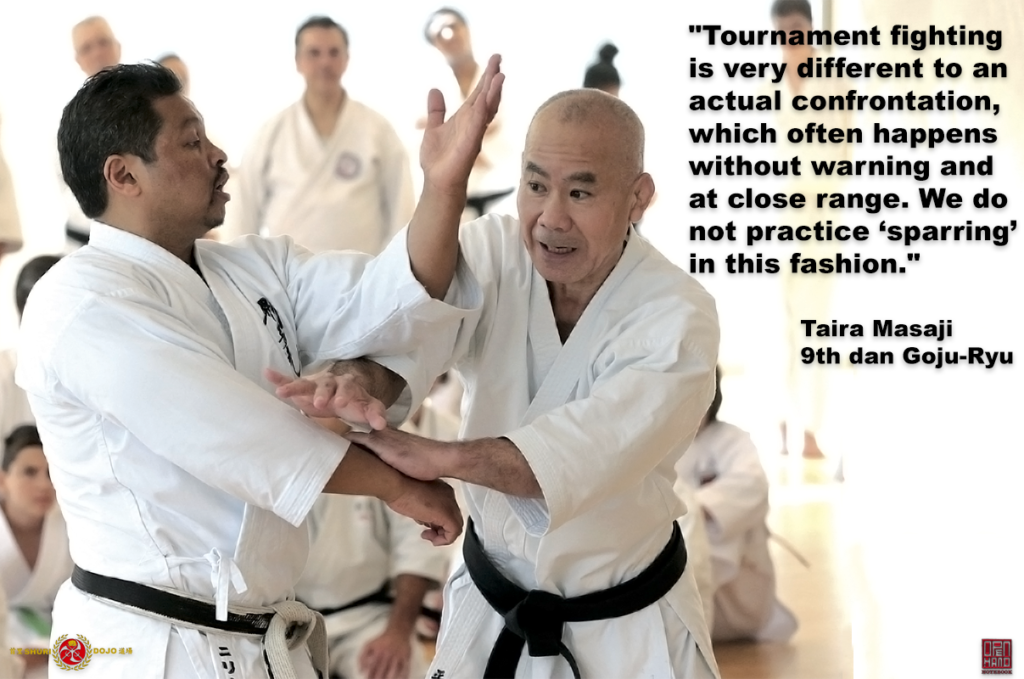
“Tournament fighting is very different to an actual confrontation.”

“Tournament fighting is very different to an actual confrontation, which often happens without warning and at close range. We do not practice ‘sparring’ in this fashion.” (End quote) – Taira Masaji 9th dan Goju Ryu . A technique might work very well against another practitioner in the dojo, using only passive resistance against you. However,

“Tournament fighting is very different to an actual confrontation.” Read More »

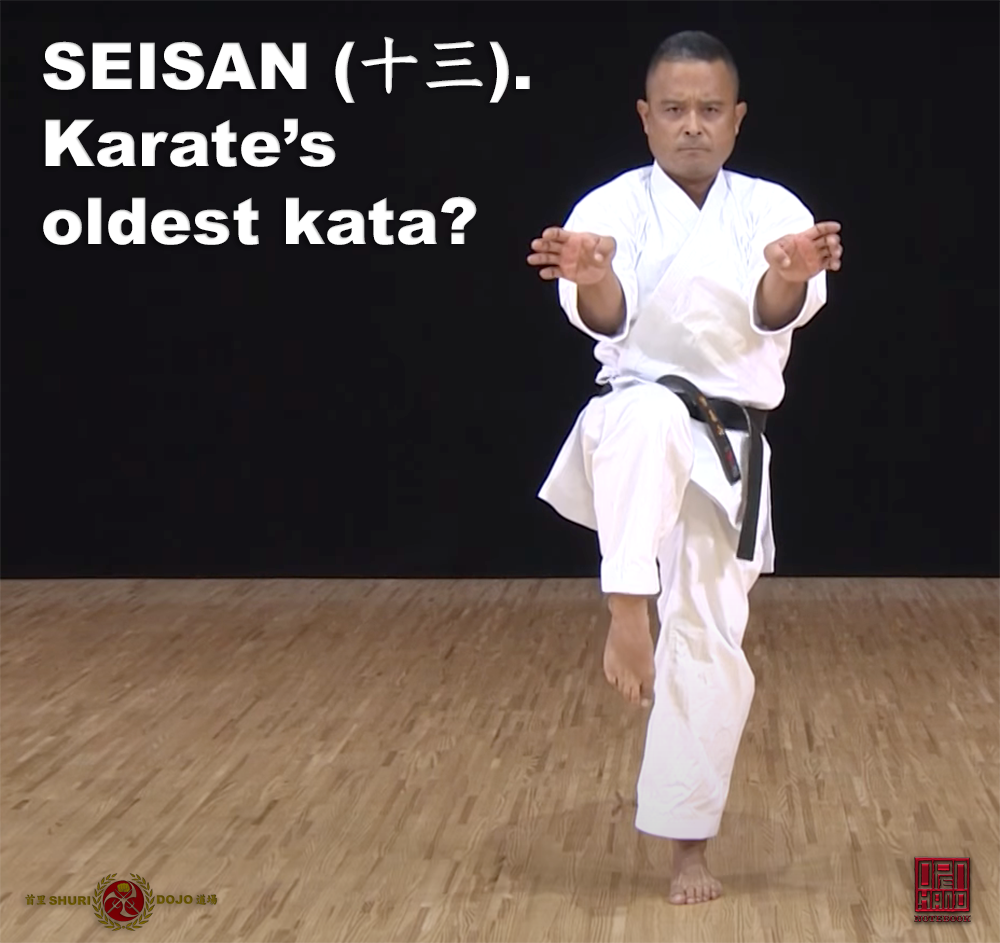
Seisan. Karate’s oldest kata?

The kata Seisan (十三) (alternate names Sesan, Seishan, Jusanpo, Hangetsu in Shotokan) literally means ’13’. Some people refer to the kata as ’13 Hands’, ’13 Fists’, ’13 Techniques’, ’13 Steps’ or even ’13 killing positions’; however, these names have no historical basis. . Seisan is thought to be one of the oldest kata, and like

Seisan. Karate’s oldest kata? Read More »

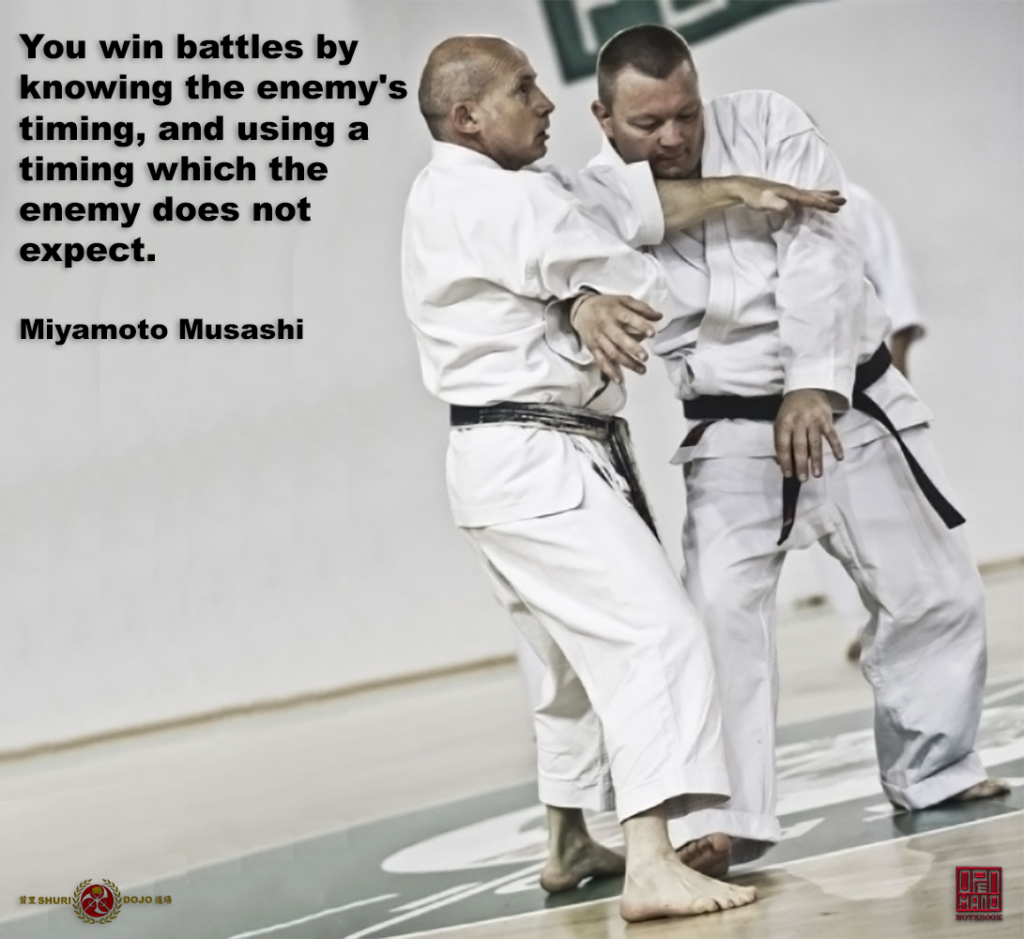
Control an attacker, don’t give them the chance to control you.

Irimi (入り身) is a Japanese martial arts term meaning “to enter with body”. An ‘irimi’ motion is one which describes when someone enters towards another. It’s a rather simple definition but performing it, especially under stress or pressure, can be quite difficult. . Perhaps a more meaningful way of using Irimi is to understand it as

Control an attacker, don’t give them the chance to control you. Read More »

What is Zen Buddhism?

What is Zen Buddhism? . Trying to explain or define Zen Buddhism, by reducing it to an article, to a post on a website is almost impossible, it weakens its meaning. . Defining Zen (禅) is like trying to describe the taste of honey to someone who has never tasted it before. You can try

What is Zen Buddhism? Read More »

Kuzushi

Balance and stability is just as important as strength and endurance in the martial arts. Good balance and stability can be the difference in landing a good punch or kick, evading a strike, or ultimately avoiding being forced to the ground, where you don’t want to be. . Good balance also increases your striking ability,

Kuzushi Read More »

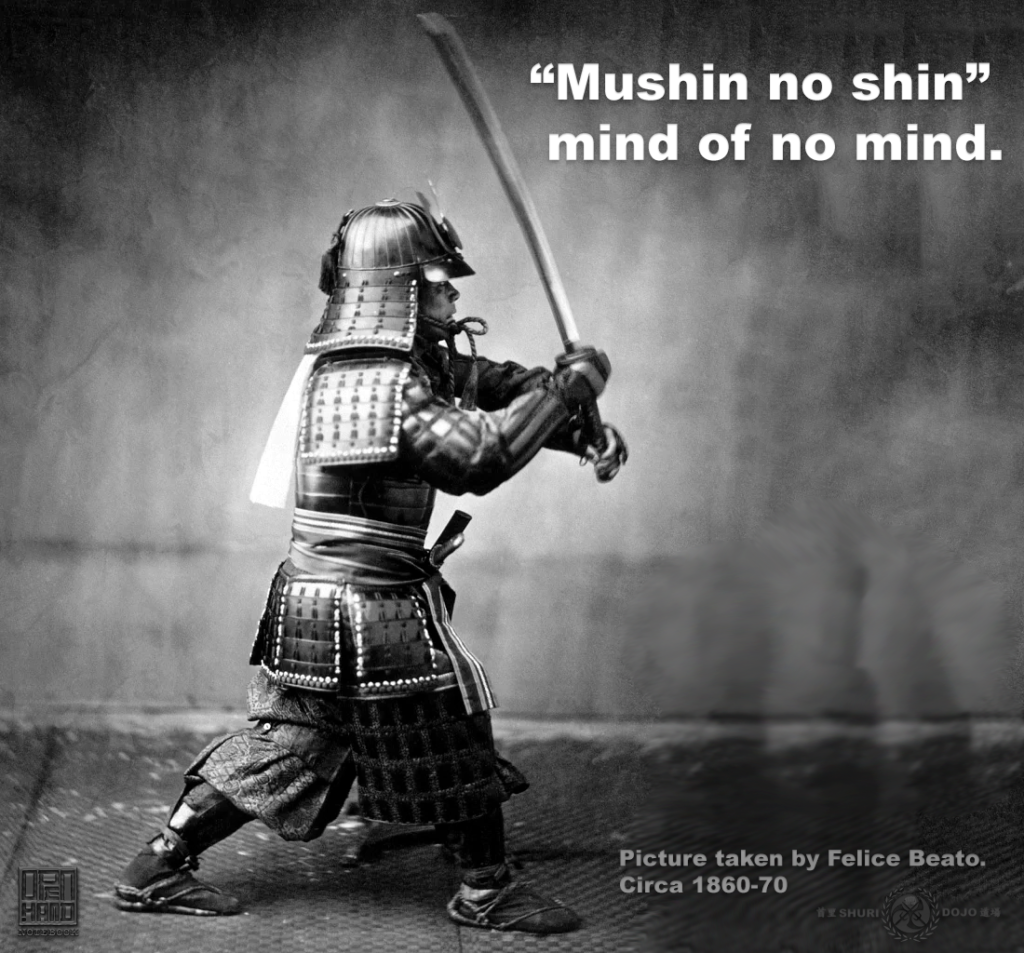
Mushin no shin

The word ‘mushin’ is comprised of two kanji characters: 無 (mu), meaning ‘nothingness’, and 心 (shin), meaning ‘heart’, ‘spirit’, or, in this case, ‘mind’. In this way, mushin can be roughly translated to ‘nothing mind’ or ‘no mind’. It comes from a longer phrase used in Zen Buddhism, ‘無心の心’ (mushin no shin), or ‘mind of

Mushin no shin Read More »