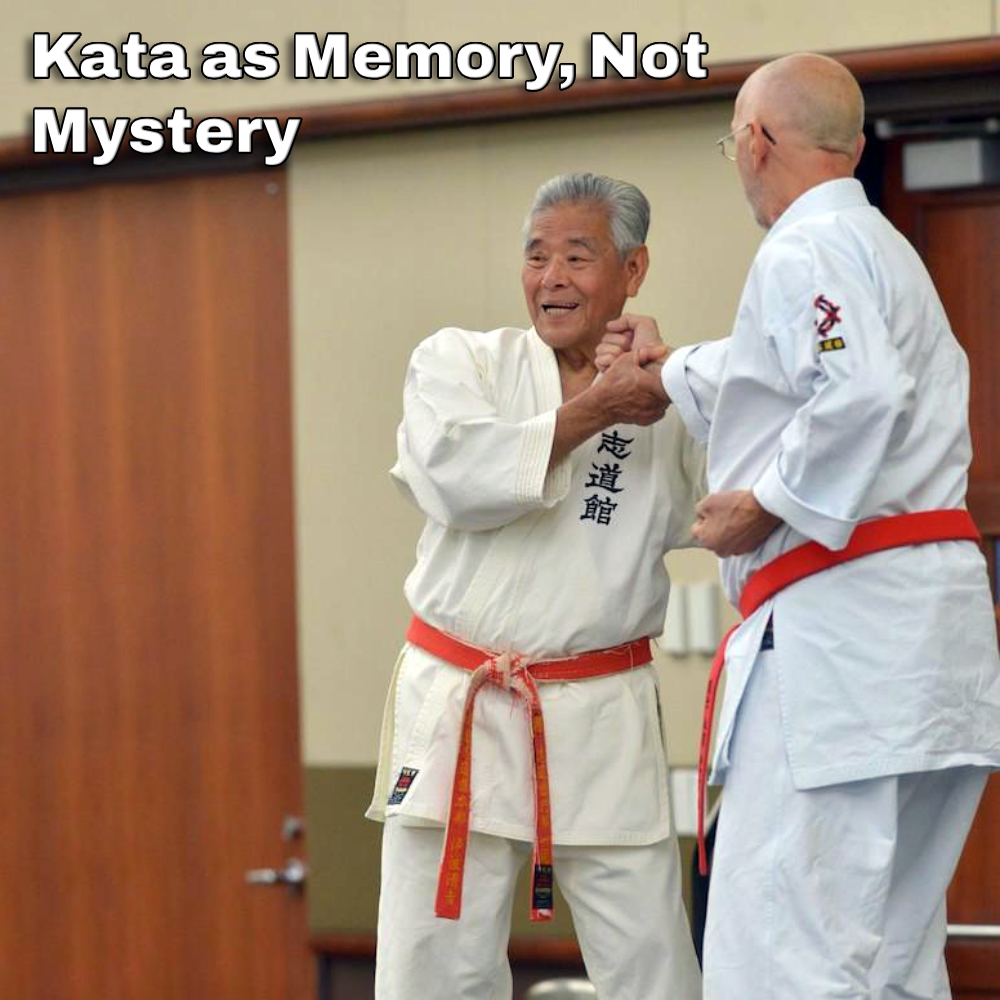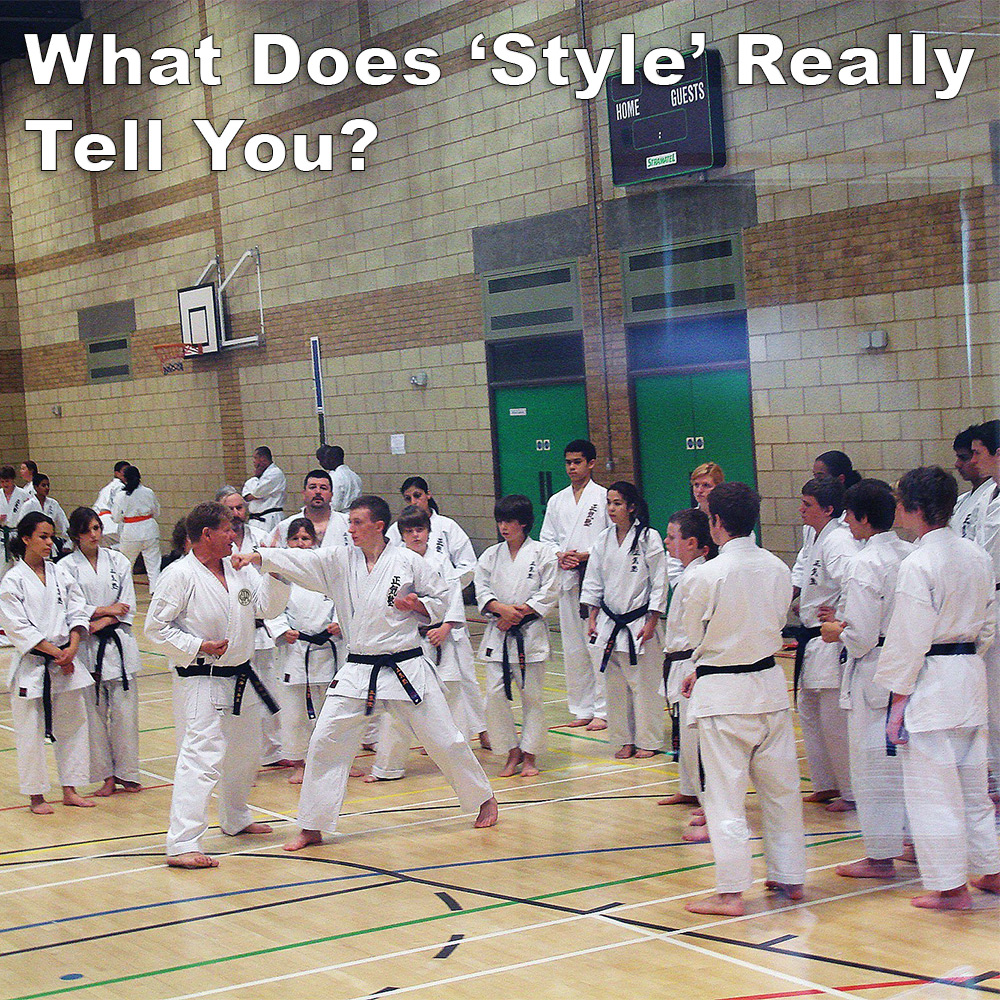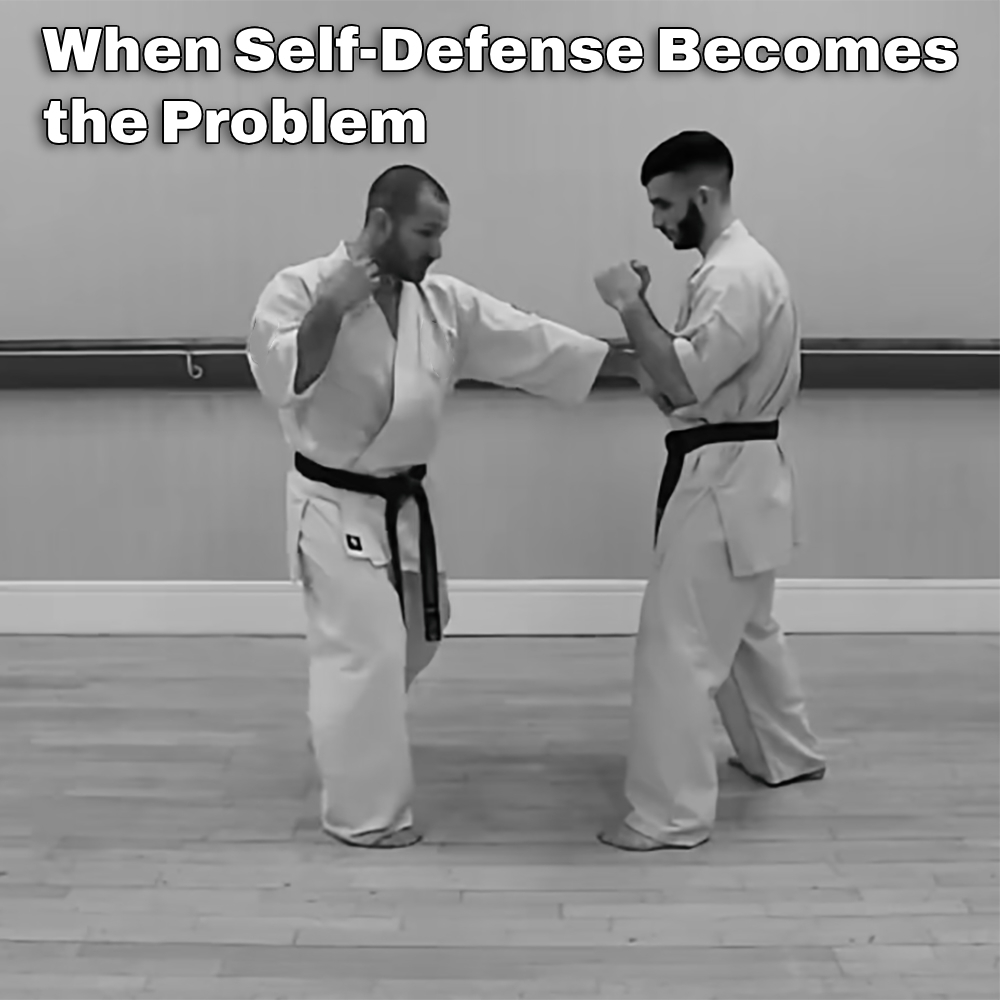
Karate is like a classic car. We don’t need it, and perhaps it’s not even fit for purpose anymore. There are other “cars” that have better fuel consumption, more comfortable seats, and all the modern features we’ve come to expect. But we still love them anyway, because they make us feel something that the modern…
Tag: Kata
Self-defense – what are we really training for?
Self-defense – the ability to protect yourself when it matters. We train for it for years, and for some of us, decades. But for what? One moment? Maybe a moment that never even comes. Does that make it any less important, or does it mean we should just treat training as something for fitness and…
There Is No ‘Ready’ Moment
I received a comment recently about the opening of kata – the yoi position – and how it might represent awareness. The point where you recognize something isn’t right and prepare yourself. I understand why people see it that way. But it rests on something that doesn’t really hold up when you look at it…
Pre-Emption and Kata: What Comes Before the Movement
There’s a question that came up after I wrote about kata not showing the setup. What about pre-emption? If it’s often better to act first – to move before the attacker commits – then where does that fit? Because kata doesn’t show that either. And that’s the point. Kata doesn’t try to show the moment of…
Reflections on Kata: Why Kata Does Not Show the Setup
I’ve been watching this for years. Someone takes a piece of kata and immediately tries to turn it into a neat sequence. This is the attack, this is the defense, this is what comes next. It all lines up nicely, and on the surface it makes sense. But the more you look at it, the…
Reflections on Kata: The Syllabus in the Shadows
I’ve been thinking lately about how much time we spend polishing the outside of the vessel without ever looking at what’s inside. After over fifty years on the mat, I’ve performed thousands of repetitions of the same kata. In the beginning, it was about the physical – the crispness of the technique, the power in…
One of the strangest claims still repeated in karate is that throws do not belong in the art. And yet the historical record says otherwise. Gichin Funakoshi himself documented throwing methods, and senior figures have long acknowledged their place. The issue is not whether throws existed in karate. The issue is why so many modern…
Was Itosu Preserving Karate – Or Changing It?
I’ve been looking at Anko Itosu’s 1908 letter again. It’s one of those documents people often cite. But if you look past the standard translations, I’m not sure the letter says what people think it says. Itosu was in a difficult position. He wanted karate in the school system, which meant he had to make…
Movement, Not Technique
Many karate practitioners are taught to think in terms of techniques. Movements are labeled, categorized, and assigned a specific purpose. One technique blocks. Another strikes. Another performs a different function entirely. Over time this can create the impression that karate is a large collection of separate techniques, each designed to solve a specific problem. When…
Why Karate “Blocks” Don’t Work the Way We Think
One of the first things you learn as a beginner is a ‘block’, right? Typically, it’s one of these: upper, middle inner, middle outer, or a down block. You spend a significant amount of time practicing these blocks, focusing on the small details, making sure your pulling hand (hikite) is positioned perfectly, all performed with…
What ‘Style’ Originally Meant in Early Karate
Choki Motobu once remarked that a single kata represented the style of the time. In my opinion, he wasn’t talking about stances and techniques, but something deeper. Motobu was known for his very practical view of fighting. He famously emphasized the importance of Naihanchi, once stating that “Naihanchi is the foundation of karate.” His focus…
Walking Your Own Path in Karate
Karate has always evolved. Kata have changed. Methods of teaching have changed. Even within a single generation, subtle differences appear. That was happening long before Westerners ever set foot in an Okinawan dojo. What we can know tends to come from personal experience rather than historical reconstruction. Much of karate back then was not taught as a…