Kicking in Karate: A Question of Context

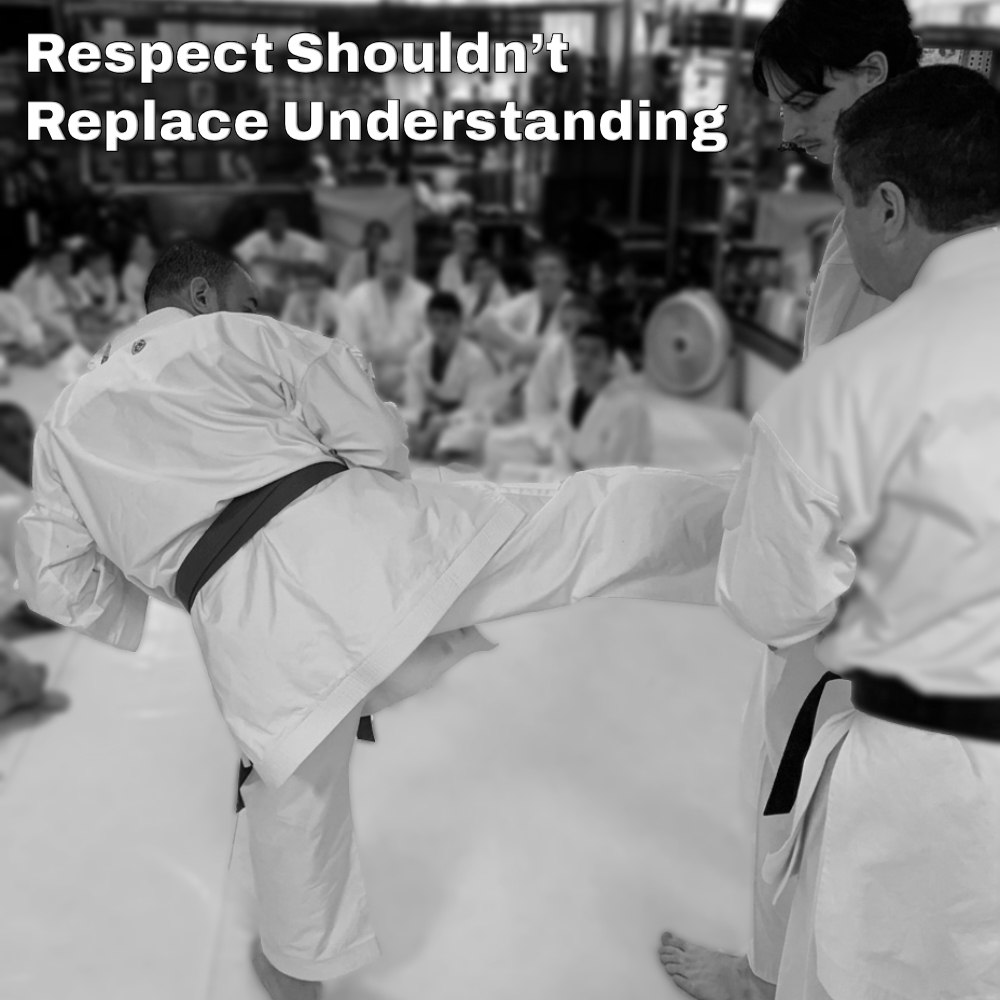
In the modern dojo, it’s common to see almost every combination include a kick somewhere within it. That isn’t accidental. It reflects the influence of competitive environments, where kicking plays a significant role. At a high level, competitors are exceptional athletes. They have the timing, flexibility, balance, and conditioning to apply kicks in ways that…

Standards Don’t Judge You – They Reveal You

Every dojo has its own rhythm, its own expectations, its own way of doing things. Mine is simple: if you train here, you show up. Not perfectly, not endlessly, not more than your life allows – just consistently. Recently someone suggested that expecting this might be a “privileged stance that lacks empathy”, or that speaking…

Tensho: Why So Many Versions?

I was practicing the kata Tensho recently – actually one of my favorite kata – and it got me thinking about its many variations. Not because it looks impressive, or because there’s a lot going on. In fact, it’s the opposite. There’s very little there on the surface. The movements are small, controlled, and repetitive….

Kata Isn’t the Problem – Misunderstanding It Is

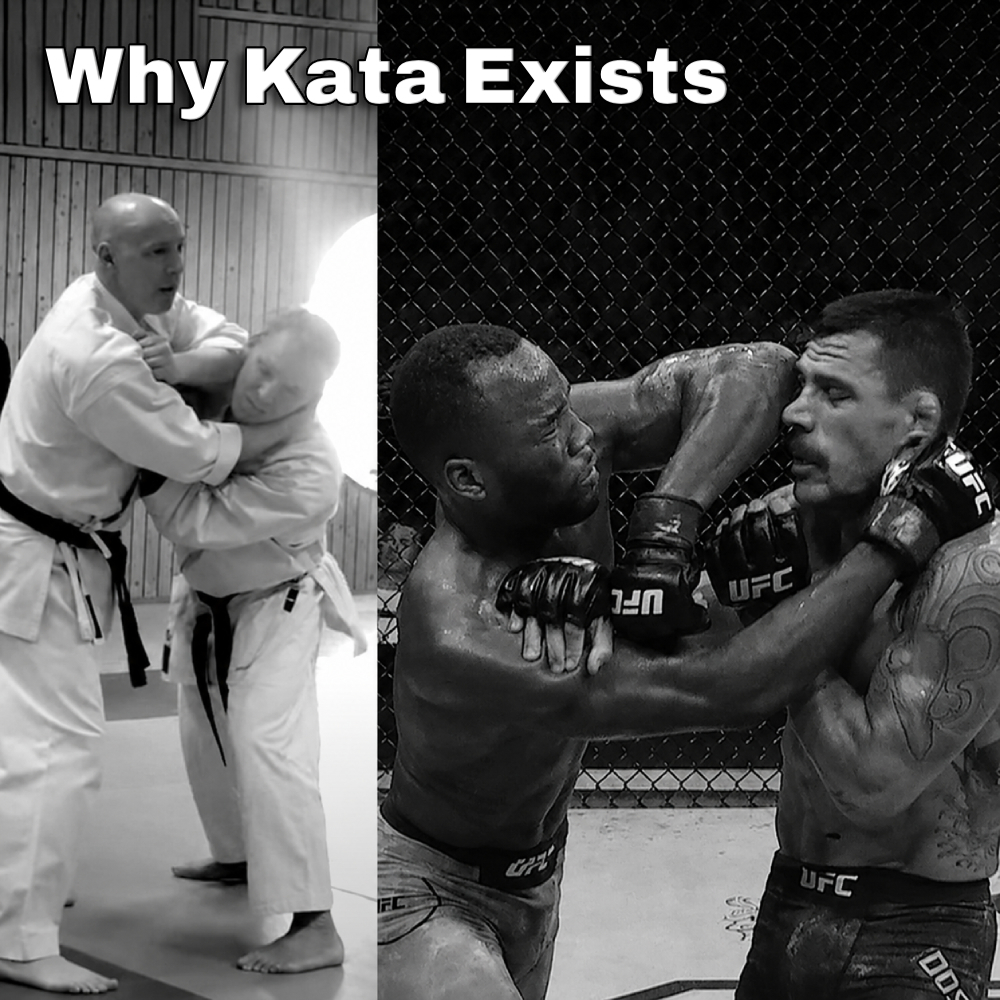
Here we go again. Every time I write about the benefits of kata – really trying to help people understand what it is and how it works – someone shows up in the comments to tell me to go and do ‘real training’. This time it was someone proudly talking about his ‘street-real’ jiu-jitsu and…

Showing Up: When You Can’t Train

Anyone teaching martial arts knows the student who talks about wanting to train but somehow can’t manage to show up on time, or may not show up at all. And when they don’t, there’s always a reason. There usually is. But it tells you something. It shows you where training really sits on their list…

One Day With a Great Teacher?

Better than a thousand days of diligent study is one day with a great teacher. It sounds right. It feels right, and most people accept it without question. But taken as it stands, it isn’t quite true. There’s no doubt that teachers can change the direction of someone’s training. Most of us can think of…

Applications – You Have to Find Them

Before I get into this article, here’s a question. As a child, who taught you to walk? Many of us want to understand the movements in kata, and there is an assumption that someone will show us what they mean. The reality is that being shown is not necessarily a requirement, and in many cases,…

What Survives at 95?

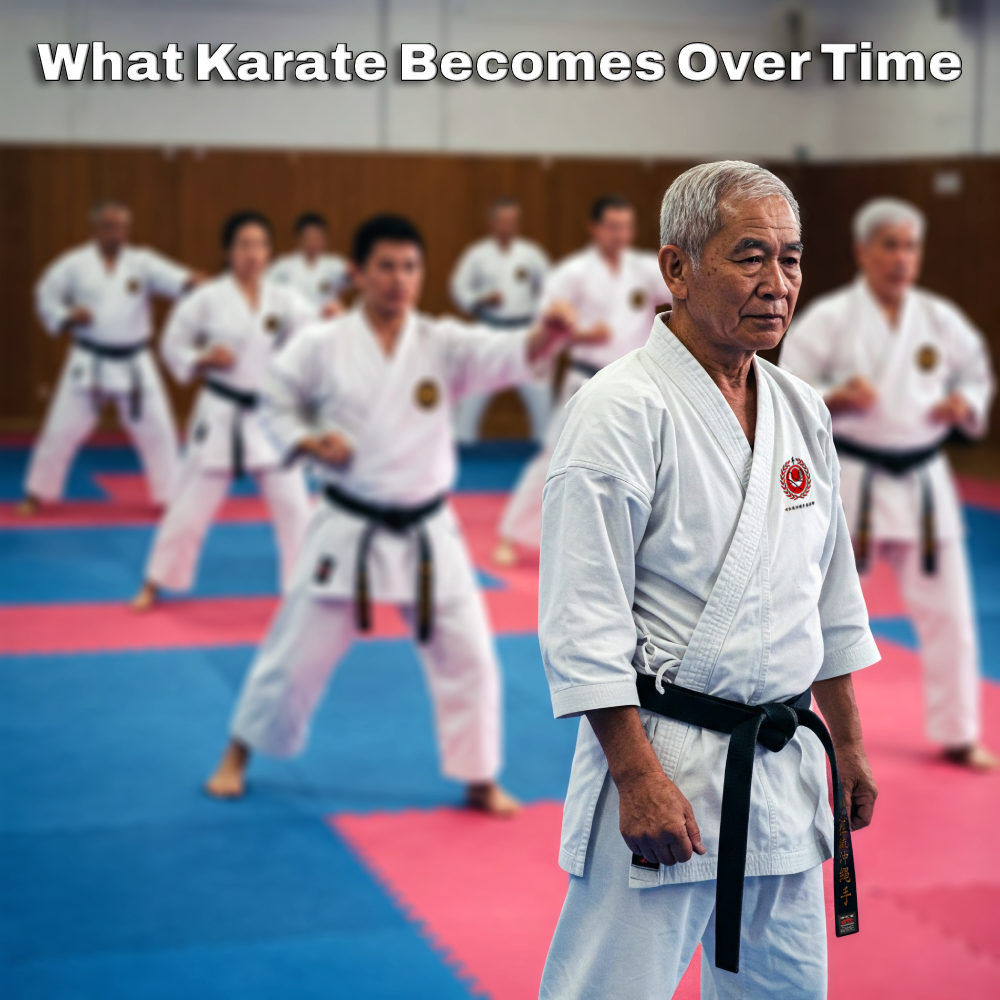
I watched a 95-year-old Okinawan Uechi-ryu master recently performing Sanseiryu, Shintoku Takara, and it stayed with me longer than I expected. Not because of anything dramatic, but because of how little seemed to be happening on the surface. There was no urgency, no obvious effort, and none of the exaggerated movement that people often associate with…

The Signal and the Noise: Finding Quiet Power

In a previous article I wrote about the exaggerated movement you see in kata, the overuse of the shoulders and torso – that’s noise. If that’s the noise, then this is the signal. To understand the difference, you have to look at how weight is being used. Most people focus on what they can see…

When Power Becomes Performance

Do you watch a kata and, at first glance, it looks impressive – snappy, powerful – but something about the function just feels wrong? The techniques look powerful, but only because the body is being overused to make them look that way. Big shoulder rotation. Excessive upper body movement. A visible “back and forth” to…

When You Step Outside

I was asked recently what actually happens when someone steps away from an organization, goes on their own path. You’re part of something for years. You put time into it, help where you can, stand alongside people, and for the most part you don’t question any of it because it feels normal. It feels like…

When Something Changes in Your Training

After decades in the martial arts, something changes. You’re no longer just repeating what you were taught. Is spending decades in the martial arts – learning and teaching across several styles – enough to shape your own method? I wonder why this is frowned upon. Much of it likely comes from the McDojo culture, where…